The Ultimate Guide to Riviera Necklaces: History, Styles and How to Choose One
6 min read
6 min read
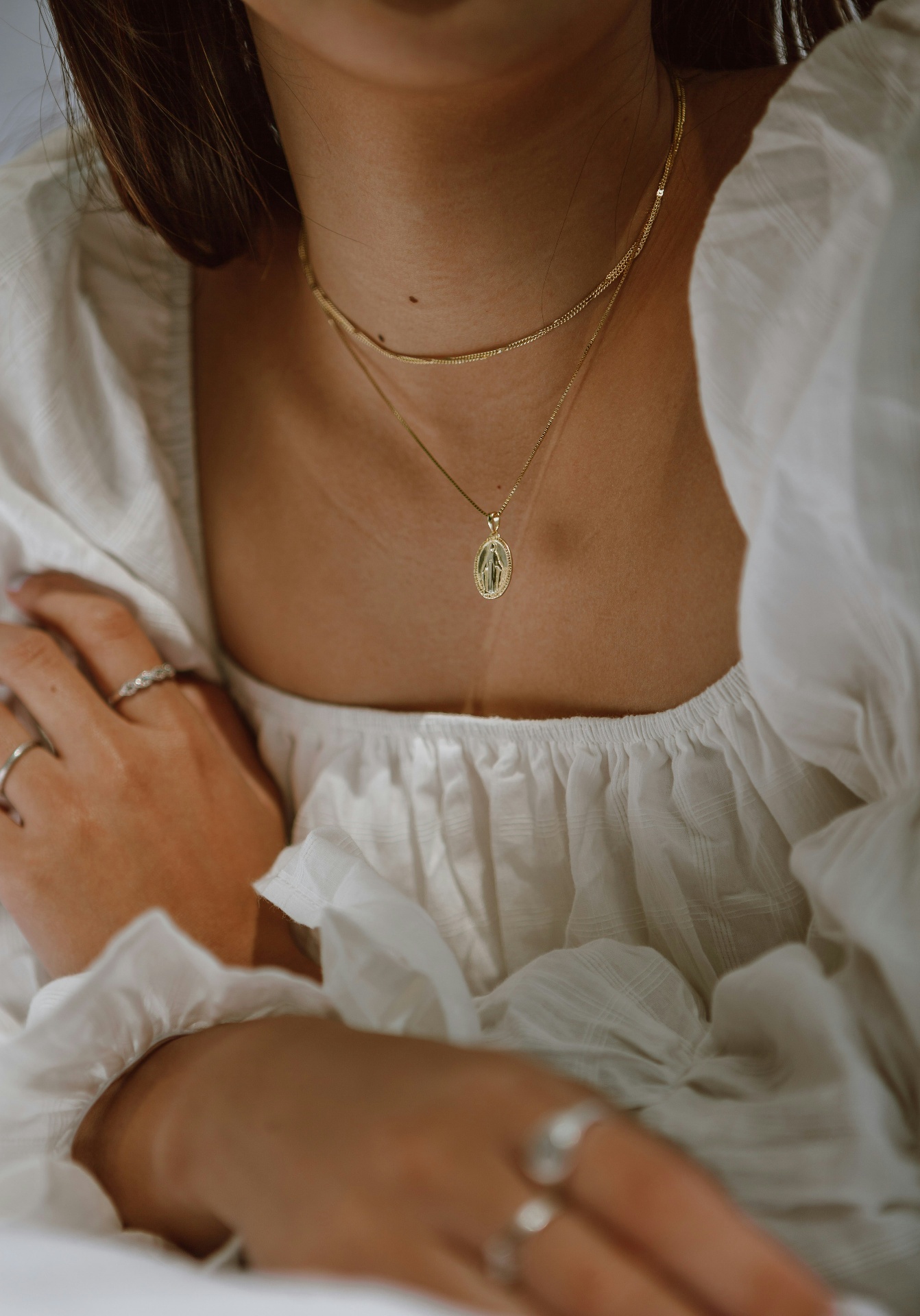
A Riviera necklace is a single continuous line of diamonds, or, more rarely, coloured gemstones, set in a slender, almost invisible mount so that the stones appear to flow around the neck like a river of light. The name comes from the French word for shoreline: rivière. It is one of the oldest and most enduring silhouettes in fine jewelry, and it is the piece a woman inherits, borrows for a wedding, and finally has made for herself.
The form first appeared in the eighteenth century, when improvements in diamond cutting made it possible to match dozens of stones for colour, size and brilliance in a single strand. Marie Antoinette owned one. So did nearly every European royal court that followed. By the belle époque, the Riviera had become the definitive evening necklace, worn with a low collar, and nothing else, because nothing else was needed.
There are, broadly, three styles. A graduated Riviera carries its largest stone at the centre and tapers evenly to the clasp, so the necklace flatters the collarbone and draws the eye upward. A uniform Riviera uses stones of a single carat weight all the way around; it is quieter, more modern, and reads beautifully under a shirt collar. A Riviera cluster substitutes small halos or navette settings for single stones, giving the line more presence in low light, the piece it becomes at candlelight dinners rather than under photographers' flashes.
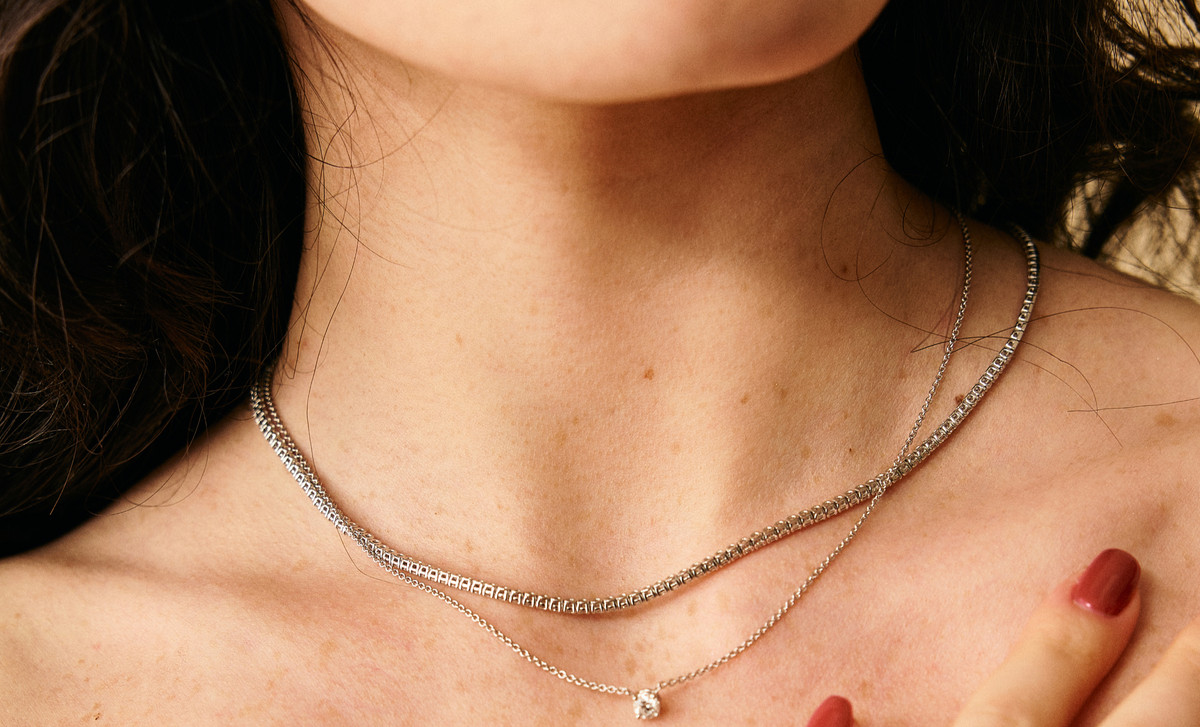
Choosing one is a question of three decisions. The first is length. A classic Riviera sits at the base of the throat, sixteen to seventeen inches; a princess length, at eighteen, is more forgiving on modern necklines. The second is total carat weight. A daytime Riviera can start at around five carats and still read as jewelry rather than costume; an evening Riviera typically lives between ten and thirty. The third, the one that separates a good necklace from a great one, is the matching of the stones. Colour and clarity must agree from clasp to clasp, or the eye will find the discrepancy across a room.
At the atelier we build Rivieras one stone at a time. We prefer to work from a client's own inherited diamonds when we can, a mother's earrings, a grandmother's ring, a small collection that has been sitting in a safe for a generation. Rebuilt into a Riviera, those stones stop being memory and start being worn again. It is the most beautiful use we know for a box of loose diamonds that no one has touched since 1978.
The setting matters as much as the stones. A Riviera is only as good as its mount is invisible. We use a hand-pierced gallery under each stone so light reaches the pavilion from below; we prefer a hidden box clasp with a figure-eight safety catch, so the necklace can be worn without a second thought. Platinum is the traditional metal because it holds fine claws indefinitely; white gold is the practical alternative and, honestly, indistinguishable at arm's length once the piece is on the skin.
A Riviera is not an occasion piece. Made properly, it is worn, to dinner, to the opera, over a cashmere sweater on a Tuesday if that is the mood. It photographs beautifully but it is not for photographs. It is for the years, and for the daughter who will inherit it, and for the way a line of well-cut diamonds catches the light of a single candle better than anything else jewelry has ever devised.
If you are thinking about a Riviera, new, or rebuilt from stones you already own, come in and let us put a strand around your neck. Fifteen minutes with a real one on the skin is worth more than any catalogue. It is the piece that tends to end the search.
If a Riviera is on your mind, take a look at our diamond tennis necklaces, set by hand in our Antwerp atelier.
Continue reading
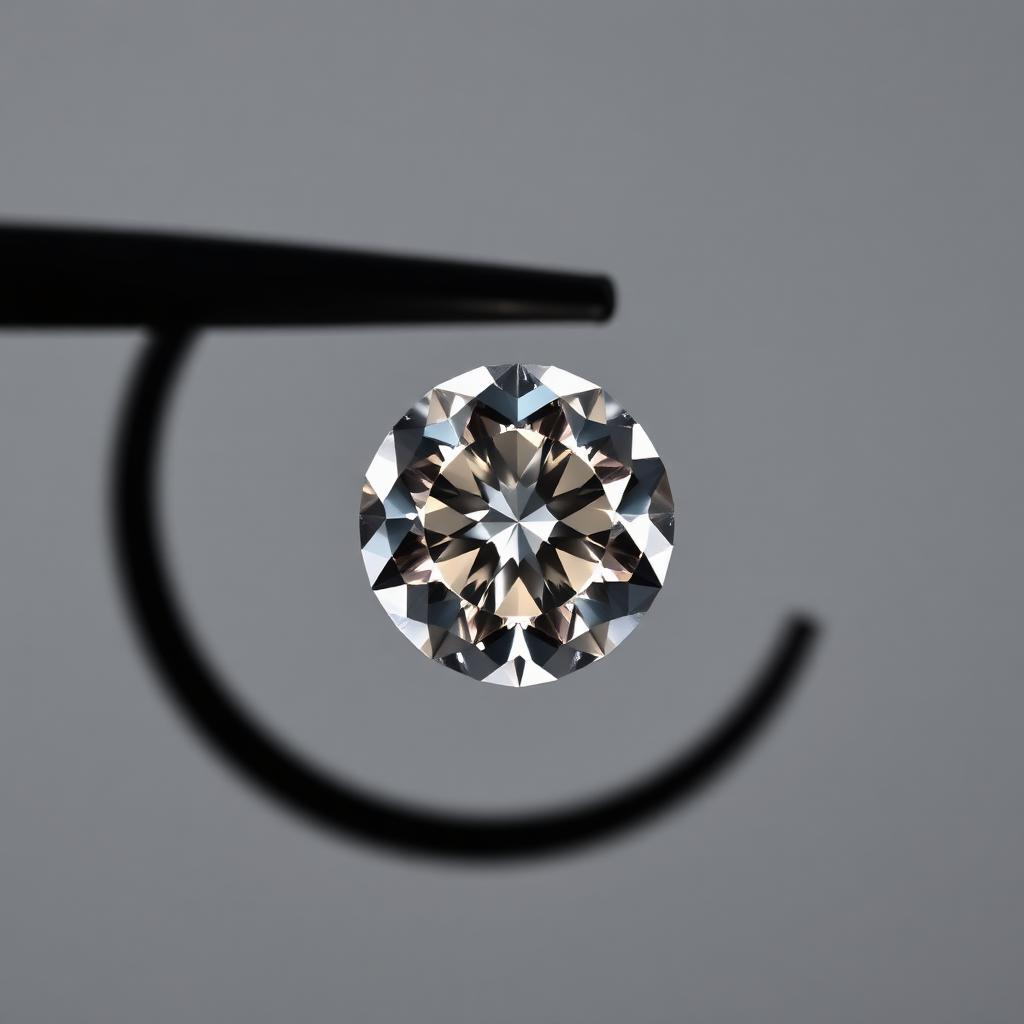
Lab-grown diamonds are real diamonds, and they have their place. Here is why, at MAISON IN, we still choose natural stones for the pieces meant to last a lifetime.

"Happiness is not a destination. It is a way of traveling through life, adorned with moments of grace." A note from founder Iakov on presence, grace, and the pieces we live in.

There's a feeling, a certain weight and warmth, when holding a piece of jewelry that's been loved before. On heirlooms, memory, and the pieces that outlive us.